


Protecting creativity in AI age: IPR expert Vikrant Rana speaks
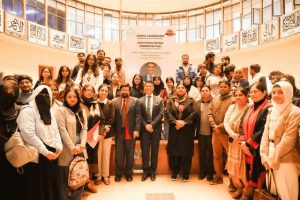
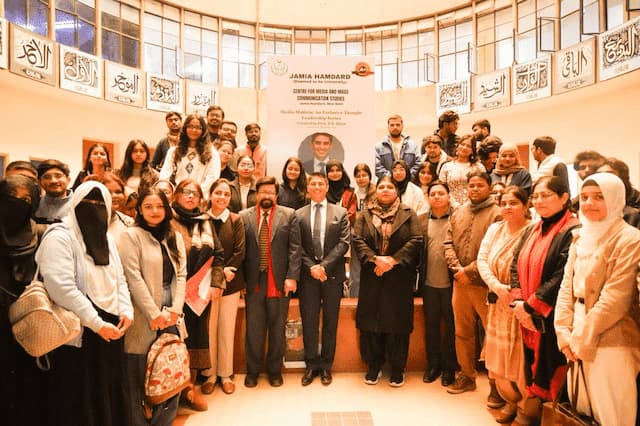
Intellectual property rights (IPR) advocate Vikrant Rana delivered an engaging lecture on copyright at Jamia Hamdard on Thursday at 11 am. Addressing budding journalists in a packed hall during the Media Matters: Connecting People, Policy and Progress seminar series, curated by Professor Farhat Basir Khan, advocate Rana emphasised the need to nurture creativity, describing intellectual property as the “creativity of the mind”.
IPR, creativity in focus
The keynote session by Rana offered an in-depth yet accessible overview of Intellectual Property Rights and their relevance to media and creative industries. Drawing on over two decades of experience, he described IPR as the “creativity of the human mind” and outlined its key branches, including trademarks, patents, design law, copyright, and trade secrets.


Using practical examples from everyday life and global brands, Rana explained how trademarks can encompass names, logos, colours, and symbols, and how design can add commercial value to products even when their functionality remains unchanged. He elaborated on patents as government-granted monopolies for inventions, emphasising that even simple innovations can qualify for protection if they add value.
A significant portion of his lecture focused on copyright law. Rana explained that original literary, artistic, musical, and dramatic works are protected from the moment of creation, with protection extending through the author’s lifetime and for sixty years thereafter. He clarified the distinction between authorship and ownership, discussed licensing and royalties, and highlighted moral rights such as the right to integrity and paternity. Important legal cases were cited to illustrate performers’ rights, fair use, and copyright infringement.
ALSO READ: Journalism educator Prof Manawwar Alam suffers heart attack, passes away
Addressing emerging challenges, Rana spoke about artificial intelligence, digital platforms, and large-scale content reuse, noting that copyright law continues to evolve in response to new technologies. He concluded by outlining practical steps to avoid infringement, including limiting copying, citing sources, seeking permissions, and responsibly using licensed or open resources. He explained that copyrights can be licensed or sold, with royalties retained by the creator. In employment settings, however, the employer typically owns the copyright, though the creator may still receive royalties.
He also distinguished authorship—the act of creating a work—from ownership, which involves managing and exploiting it, calling this distinction vital for anyone navigating the modern creative and digital landscape.
Sharing insights with students
Prof (Dr) Reshma Nasreen, Director (In-charge), Centre for Media and Mass Communication Studies, addressed the gathering at Jamia Hamdard. The session concluded with a vote of thanks by Prof Reshma Nasreen, who appreciated the depth and clarity of the discussion and underscored the importance of such engagements for students preparing for media careers in a rapidly evolving digital environment.

When we protect ideas, we strengthen democracy: Prof Farhat
Delivering the opening keynote, Prof Farhat Basir Khan set the tone with a powerful reflection on the role of media in modern society. He cautioned that unchecked copying and misuse of creative work does not merely harm individuals but undermines the future of originality itself.
“When creative work is copied without credit or compensation, we do not just harm creators, we weaken the future of originality,” he said. Prof Khan described universities as spaces meant for dialogue rather than silence and thanked Prof (Dr) Afshar Alam, Vice Chancellor of Jamia Hamdard, for fostering an environment that supports critical engagement.


“Ideas are the wealth of our time, and intellectual property is their dignity,” Prof Khan said. He concluded with a line that resonated strongly with the audience and captured the spirit of the Media Matters series: “When we respect creators, we protect culture. When we protect ideas, we strengthen democracy.”
The event reaffirmed Jamia Hamdard’s commitment to thoughtful media education and ethical practice. As Prof Farhat Basir Khan aptly summed up, the Media Matters conversation matters for everyone who believes that media itself matters.
Thoughtful questions from budding journalists
Rana’s animated lecture spanned over an hour, during which he outlined the fundamentals of copyright, trademarks, patents, and trade secrets, emphasising the importance of protecting creative work.
However, it was the question-and-answer session that truly highlighted the intellectual curiosity and preparedness of Jamia Hamdard’s journalism students. The students impressed not only Rana but also attending faculty members with their sharp, insightful, and often challenging questions, demonstrating a strong grasp of the issues discussed.
One student asked Rana to explain how copyright laws apply in the age of AI, particularly as students, freelancers, and the general public increasingly use chatbots and generative AI tools to create text, images, and videos. Rana listened attentively and responded in detail, explaining the nuances of copyright protection in AI-generated works. He stressed that while technology can assist in creation, human creativity and original input remain central to copyright law. He also reiterated practical steps for respecting copyright, including citing sources, seeking permissions, and using licensed or open-source materials responsibly.
The session stood out not only for its academic depth but also for the interactive energy between students and the expert. Faculty members praised the students’ engagement, noting that such interactions are essential in preparing future journalists to navigate the ethical, legal, and technological challenges of the media landscape.
By the end of the session, it was clear that the dialogue had achieved its purpose: creating awareness about intellectual property in a world increasingly shaped by AI, while encouraging students to critically engage with the forces shaping modern creativity and media industries.